












- Home
- General Information
- Message from the President

President's Greeting
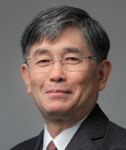
Osamu Onodera, M.D., Ph.D
68th Annual Meeting of the Japanese Society of Neurology
Executive Director and Vice President, Niigata University
Professor and Chair, Department of Neurology, Brain Research Institute, Niigata University, Japan
The 68th Annual Meeting of the Japanese Society of Neurology will be held in May 2027, with Toki Messe in Niigata City as the main venue. I am Osamu Onodera, and I have the honor of serving as President of this Annual Meeting. On behalf of the Department of Neurology at Niigata University, I would like to extend my sincere greetings to you all.
The theme of this Annual Meeting is:
"Beyond Symptoms:
Opening the Way to Whole-Person Neurological Care through Dialogue, Co-Creation, and Empathy"
Since its inception, neurology has been a discipline that takes symptoms as the starting point for both clinical practice and intellectual inquiry. For nearly a century and a half since Jean-Martin Charcot, we neurologists have used symptoms such as tremor, numbness, dizziness, unsteadiness, and difficulty speaking as clues to determine where in the nervous system abnormalities are occurring and what kind of processes underlie them.
The methodology of neurological localization, meticulous history-taking, and careful neurological examination remain a source of unwavering pride for neurologists. I believe they constitute the core of our expertise as a specialty-one that cannot be replaced by any other field of medicine.
And yet, we now stand at a clear turning point.
Genomic medicine, molecular pathophysiology, neuroimaging, digital biomarkers, and artificial intelligence are advancing at remarkable speed. These developments have brought us into an era in which we can directly approach the molecular mechanisms of disease long before symptoms become clinically apparent.
In addition to anti-amyloid antibody therapies for Alzheimer's disease and gene-targeted therapies for ALS, new molecular targets are also being identified in spinocerebellar degeneration and cerebral small vessel disease. Disease-modifying therapies that intervene at the root of disease processes are finally beginning to come within the reach of our clinical practice and research.
Neurology, which has long inferred lesion localization from symptoms, is now expanding toward preventive and preemptive neurology-an approach that captures molecular disease mechanisms and seeks to prevent the emergence of symptoms themselves. This transformation is steadily taking place in both clinical and research settings.
At the same time, the experiences and narratives of each patient-something that cannot be fully captured through an understanding of molecular pathophysiology alone-are becoming more important than ever.
Pain that cannot be quantified, discomfort that does not appear in test results, changes in daily life and anxieties that cannot be fully explained by a diagnosis alone: the experiences of patients with neurological disorders are often especially difficult to put into words. The more refined our biological understanding becomes, the more deeply we must re-examine, paradoxically, our attitude toward receiving each patient as a whole person.
In other words, what is required of neurologists today is both the insight to discern the molecular pathophysiology behind symptoms and the sincerity to listen to the life story that lies beyond them.
I hope that the Niigata Meeting will serve as a place where we can declare this new vision of the neurologist.
To this end, we have established three axes for this Annual Meeting.
"To Share"
An axis of empathy, through which we share cases, patient experiences, and educational practices, and seek to bring together science and human understanding.
"To Connect"
An axis of dialogue, through which we cross boundaries between departments, generations, professions, regions, and nations, and create mutual understanding and practical value.
"To Open"
An axis of co-creation, through which we challenge established theories and frameworks, and develop cutting-edge research and visions for the future.
I firmly believe that it is at the intersection of these three axes that the next generation of whole-person neurological care will be nurtured.
From a one-directional venue where participants simply listen, toward a forum for rigorous intellectual exchange and dialogue, where each participant engages in discussion, co-creation, and empathy-this is the kind of new academic meeting we aspire to create.
Niigata is a place where the tradition of neurology has been continuously carried forward since the time of Professor Tadao Tsubaki, our first professor. It is also home to the Brain Research Institute of Niigata University, which possesses one of the world's leading human brain resources for the study of neurological disease.
Surrounded by Niigata's rich nature and culinary culture, the flow of the Shinano River, and the breeze from the Sea of Japan, I hope to share with all of you a time of encountering new ideas, reconnecting with old friends, and meeting future companions through dialogue.
We sincerely look forward to welcoming physicians, researchers, medical staff, patients and their families, students, and all participants from Japan and abroad to Toki Messe in Niigata.
Together, let us move forward toward what lies beyond symptoms in neurological care.

Osamu Onodera, M.D., Ph.D.